



10 years since Kyrgyzstan joined EAEU: Monograph highlights achievements of integration
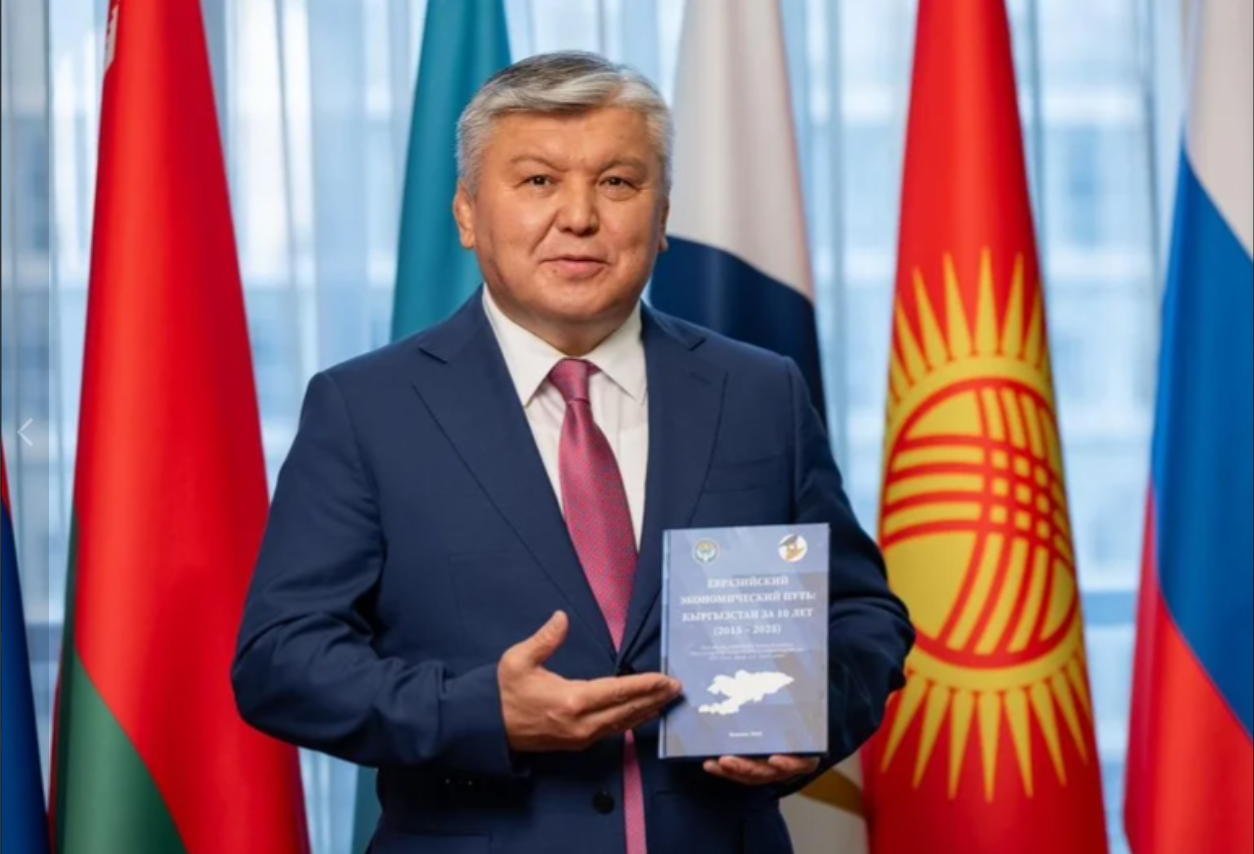
Bishkek, Dec.12, 2025. /Kabar/. This year marks 10 years since Kyrgyzstan joined the Eurasian Economic Union (EAEU). This anniversary not only marks a certain historical milestone for the country, but also reminds us of the need to assess the real results of integration.
Until 2015, the issue of integration was widely discussed in the country, and various points of view were expressed in public and expert circles. Polls showed that 86 percent of citizens supported joining the union. Economic analyses showed that integration is important for Kyrgyzstan not to be left out of major markets.
Over the past decade, Kyrgyzstan has achieved a number of successes within the EAEU, but at the same time faced new challenges. The lack of clear, systematic scientific research on integration is one of the factors that led to a gap in public understanding.
The first comprehensive work that filled this gap was the monograph "Eurasian Economic Path: Kyrgyzstan in 10 Years (2015–2025)", published in November 2025. President Sadyr Zhaparov noted the importance of the book, saying that the EAEU "has taken a worthy place in the global economic architecture."
The author team that prepared the monograph is experienced employees of the Eurasian Economic Commission and the Cabinet of Ministers of the Kyrgyz Republic. As specialists who fully understand integration processes, they have supported the material with extensive facts.
The work consists of three parts:
a comparative analysis of global regional associations;
Kyrgyzstan's 10-year path in the EAEU;
future directions and scenarios.
The book highlights the achievements of integration - improving conditions for labor migrants, the launch of the Russian-Kyrgyz Development Fund, and the expansion of export markets. At the same time, the need for economic diversification, expanding industrial cooperation, and strengthening state institutions is highlighted.
The monograph is not only a historical document, but also an important platform for strategic thinking. It opens the way for a new, deeper dialogue on Kyrgyzstan's place in Eurasian integration.
