



Iran to continue support for Syria: UN envoy
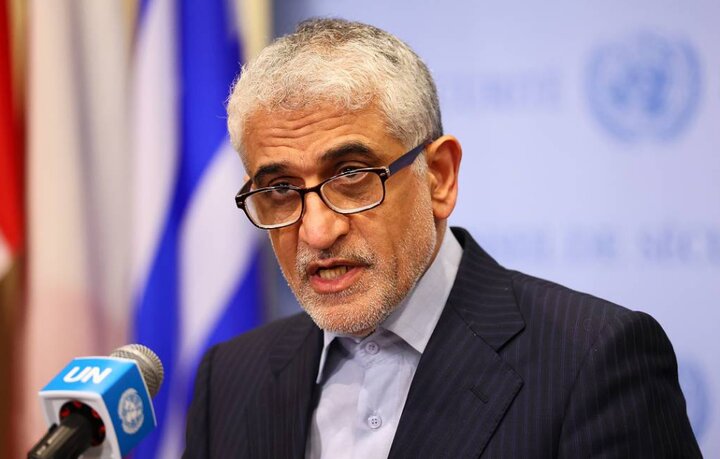
TEHRAN, Feb. 14 (MNA) – "Iran will continue to support a stable, unified, and secure Syria, free from terrorism, foreign occupation, and external interference," the country's ambassador to the United Nations says.
Iran’s Ambassador and Permanent Representative to the United Nations, Amir SaeEd IravanI, says the Israeli regime should comply with international law and cease its violations of Syrian sovereignty and territorial integrity.
Iravani made the remarks while addressing a UN Security Council session on “The situation in the Middle East: Syria,” which was held on Friday.
He said that Israel’s continued occupation of Syrian territory and its military activities, including in the occupied Syrian Golan, remain a direct threat to stability and regional peace, adding that the regime should stop its violations of Syrian sovereignty and territorial integrity.
The following is the full text of the Iranian ambassador’s address to the Security Council session:
Regarding the situation in Syria, I wish to make the following points.
First, the Syrian people continue to endure severe humanitarian, economic, and security hardships, despite the important transitional steps undertaken by Damascus over the past year. We support the United Nations’ efforts to help alleviate these challenges and to contribute to stability and recovery. We welcome efforts to ensure that United Nations engagement remains coherent, effective, and responsive to the priorities and needs of the Syrian people. Any new role must support a Syrian-owned and Syrian-led, inclusive political process, in full respect of Syria’s sovereignty, unity, and territorial integrity.
Second, recent developments on the ground, particularly in north-eastern Syria, are of significance. The expansion of the interim government’s authority into areas previously controlled by the SDF, together with the comprehensive integration agreement, represents an important step toward de-escalation, restoring Syria’s territorial integrity, and strengthening State institutions. At the same time, the situation remains fragile. Integration must proceed in an orderly, peaceful, and inclusive manner. All parties must uphold the ceasefire, prioritize the protection of civilians, facilitate the dignified and voluntary return of displaced persons, and ensure accountability for violations. We take note of steps aimed at advancing inclusivity, including measures related to Kurdish rights. Such initiatives can strengthen national cohesion, provided they are pursued through credible institutions and within the framework of Syria’s unity and territorial integrity.
In this regard, we stress that the rights, safety, and dignity of all Syrians must be fully respected, without discrimination. This includes the protection of religious and ethnic minorities. Any acts of incitement, intimidation, sectarian violence, or collective punishment must be firmly rejected and addressed.
Third, the threat of terrorism remains a grave concern. As highlighted in the Secretary-General’s latest report (document S/2026/57), ISIS/Da’esh continues to operate across Syria, including through attacks in the north and north-east. We are particularly concerned about the security of detention centers and camps holding thousands of ISIS fighters and their families. Any security vacuum or disruption could have dangerous consequences for Syria and the wider region. We underscore the need for the repatriation of foreign terrorist fighters and their families to their countries of origin, in line with international obligations.
Fourth, the humanitarian situation remains alarming. The international community must move beyond emergency relief by supporting early recovery, reconstruction, and economic rehabilitation. Syria’s recovery also requires genuine investment and the removal of obstacles that hinder economic rehabilitation and development. Efforts toward stabilization and transition must be inclusive and responsive to the needs and aspirations of all Syrians.
Fifth, Israel’s continued occupation of Syrian territory and its military activities, including in the occupied Syrian Golan, remain a direct threat to stability and regional peace. The Israeli regime must comply with international law, including the 1974 Disengagement Agreement, and cease its violations of Syrian sovereignty and territorial integrity. De-escalation arrangements cannot legitimize occupation. The Security Council must act; selective silence and political shielding only normalize aggression and undermine this Council’s credibility.
Finally, the Islamic Republic of Iran reaffirms its firm support for Syria’s sovereignty, unity, territorial integrity, and a Syrian-owned and Syrian-led political process. Iran will continue to support a stable, unified, and secure Syria, free from terrorism, foreign occupation, and external interference.
